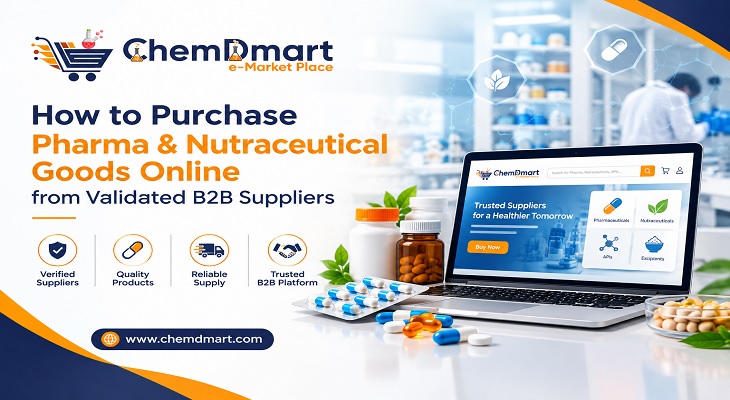
Purchasing pharma and nutraceutical goods online is easy. It all begins with searching for the goods you want and finding out the supplier of your choice. The truth is that sourcing of pharmaceuticals in the B2B market environment is not that easy. It is not necessarily the case that a supplier who shows up in an online directory is qualified enough to handle your sourcing. Buyers will still have to confirm the manufacturer, product specifications, documentation, certificates, minimum order quantity, lead times and regulatory compliance, amongst others.
Why Random Supplier Directories Are Not Enough
A traditional supplier directory will typically provide you with a company name, the name of the product, the location, and contact information. This is quite useful in conducting preliminary research but may lack sufficient information to base your purchase on. For pharma and nutraceutical procurement, buyers usually need more than a phone number.
You should find out about:
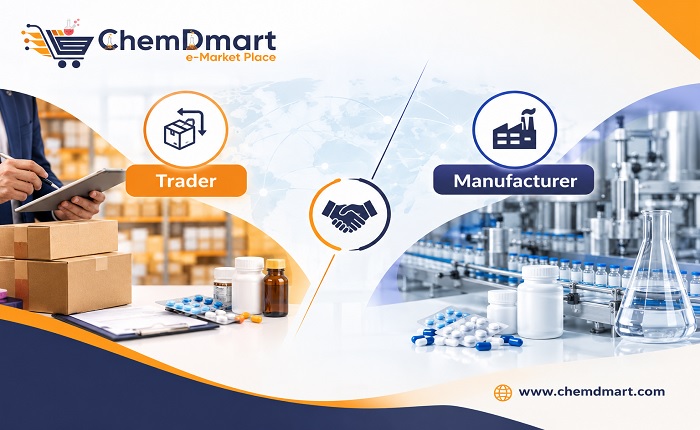
- Whether the company is a manufacturer, trader, or distributor?
- The location of the manufacturing facility?
- Specifications of the product?
- Certificate of Analysis (CoA) with the supplier?
- Quality Certifications?
- What is the MOQ?
- Can the supplier ship internationally to your country?
- How long would it take?
These are the reasons why supplier discovery in Buy Pharma & Nutraceutical Products sourcing must come first but should not be the end of it.
Items to Consider Prior to Selecting an Online B2B Supplier
Prior to the issuance of an RFQ or ordering, gather some basic details regarding the supplier.
Start with identification of the company and its position in the supply chain. If you require raw material direct from the manufacturer, determine whether the company manufactures the product itself or obtains it from somewhere else.
Next, consider product details.
In the case of APIs and pharmaceutical raw materials, there might be requirements for identity, assay, impurities, microbiological criteria, packaging, storage and shelf life, etc.
The quality documents will play a key role in the selection process as well. GMP is not just a label that could be used because it was provided by the supplier on his profile page. WHO defines GMP as the quality assurance system aimed at providing assurance that medicines are consistently manufactured and controlled according to quality standards.
Therefore, if you are dealing with GMP supplier, request the relevant certificate and check whether it pertains to appropriate manufacturing plant and product range.
How to Verify GMP and Quality Documentation
One common mistake is treating "GMP certified" as a complete supplier qualification.
It is not.
GMP relates to the manufacturing and quality system. Buyers still need to evaluate the specific supplier and product.
For example, ask for:
- GMP certificate or relevant quality documentation
- Product specification
- Recent batch CoA
- Manufacturing-site details
- Manufacturing licence, where applicable
- Safety Data Sheet (SDS)
- Product technical data
- Packaging and storage information
- Traceability information
For regulated markets, buyers should also check the requirements of the destination country.
In India, buyers can refer to relevant CDSCO resources when checking regulatory and manufacturing information. For European sourcing, databases such as EudraGMDP can provide information related to GMP certificates and manufacturing authorizations.
The important point is simple: supplier listing, supplier verification, and product qualification are three different things.
What to Check When Buying Nutraceutical Ingredients
There is also the problem of nutraceutical sourcing.
The products being tested could range from vitamins, minerals, herbal products, amino acids, probiotics, enzymes, or any form of supplement. Regardless of the product, however, the testing process would still be mandatory.
Check:
- Ingredient identity
- Source and origin
- Purity or potency
- Standardisation, where applicable
- Heavy-metal limits
- Microbiological specifications
- Allergen information
- Residual solvents or contaminants, where relevant
- CoA and testing information
- Storage requirements
- Shelf life
- Packaging
A good nutraceutical marketplace can help buyers discover several suppliers, but quality assessment should still be completed before commercial purchasing.
Pharmaceutical Marketplace India vs. Random Supplier Directory
The difference is mainly in how the sourcing process is handled.
|
Supplier Directory
|
B2B Pharmaceutical Marketplace
|
|
Mainly supplier listings
|
Product and supplier discovery
|
|
Basic company information
|
More structured supplier/product information
|
|
Buyer contacts suppliers individually
|
Buyers can often submit RFQs
|
|
Limited comparison
|
Easier supplier comparison
|
|
Primarily discovery
|
Discovery plus sourcing workflow
|
This does not mean every marketplace automatically verifies every supplier or guarantees product quality.
Buyers should still perform supplier qualification.
The value of a pharmaceutical marketplace India is that it can make the first stage of procurement faster and more organised.
10 Questions to Ask Before Placing an Order
Prior to transitioning from inquiry to purchase, inquire of the supplier:
- Are you the producer, the trader, or the distributor?
- Where is the item manufactured?
- Can you provide the current product specification?
- Can you provide a recent batch CoA?
- What GMP or quality certifications are available?
- What is the MOQ?
- What is the expected lead time?
- What packaging options are available?
- Have you supplied this product to my destination market?
- Can you provide the regulatory and technical documents required for qualification?
These questions can quickly separate a serious B2B supplier from a basic online listing.
Common Mistakes Buyers Make When Sourcing Online
Choosing the supplier based on price alone is the major error.
The tempting quotation is fine until you find out the MOQ is too high, delivery times are too long, the documentation is insufficient, or the quality of the material is unsatisfactory.
Other errors are:
- Contacting only one supplier
- Assuming a directory listing means verification
- Not checking manufacturer vs. trader status
- Accepting a GMP claim without reviewing documentation
- Not requesting a CoA
- Ignoring storage and transportation requirements
- Not checking destination-market regulations
- Comparing suppliers only on price
A better approach is to compare suppliers on quality, documentation, price, MOQ, lead time, capacity, and reliability.
How ChemDmart Helps With B2B Supplier Discovery
ChemDmart is designed for B2B pharma and chemical sourcing rather than general consumer shopping.
The platform links buyers with the manufacturers, suppliers, distributors, and others from the pharmaceuticals, chemicals, biotechnology, agrochemicals, and related industries.
For buyers, the process can start with product discovery and supplier search. RFQs can then be used to communicate purchasing requirements and compare potential suppliers.
This can be useful for procurement teams searching for pharma raw materials, APIs, intermediates, nutraceutical ingredients, specialty chemicals, and other industrial materials.
But the ultimate responsibility for qualifying suppliers lies with the buyer. The marketplace can make it easier to find and communicate with suppliers but does not substitute for your organization's qualification process.
Final Takeaway
Buying pharma and nutraceutical products online does not have to be difficult, but it should not be treated like ordinary online shopping.
Start with a reliable B2B sourcing platform. Find multiple suppliers. Check whether they are manufacturers, traders, or distributors. Review GMP and quality documentation. Request specifications and CoAs. Compare commercial terms. Then complete your internal supplier qualification.
The goal is not simply to Buy Pharma & Nutraceutical Products online.
It entails making the right choice of the supplier and buying something that fulfills your business needs in terms of quality and regulation.