Selecting an appropriate supplier is one of the most crucial elements of procurement in the pharmaceutical sector. It doesn’t matter whether you are searching for APIs, intermediate products, excipients, or nutraceutical ingredients; the name of the manufacturer of the product should be considered on an equal footing with pricing.
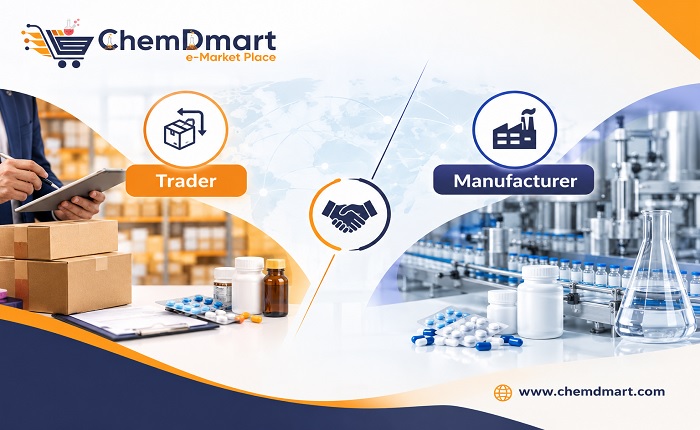
The manufacturer produces the material in their own factory, whereas the trader or distributor buys the product from the manufacturer and sells it. Neither method is better than the other because what works for you will depend on your individual situation.
Manufacture vs Trade: Difference Between Them
|
Manufacturer
|
Trader / Distributor
|
|
Produces the material
|
Sources from manufacturers
|
|
Owns or operates manufacturing facilities
|
Focuses on sourcing and distribution
|
|
Offers direct technical support
|
Provides broader product access
|
|
Better production visibility
|
Stronger logistics and inventory flexibility
|
A quotation may come from a distributor even though another company manufactured the product. That's why buyers should verify both the supplier and the original manufacturing source.
7 Tips for Identifying Authentic Manufacturers
1. Check the Manufacturing Facility
Inquire as to where the item is manufactured and gather information on the manufacturing facility. A genuine manufacturer will readily provide this information.
2. Review the Documentation
Don't rely on marketing claims. Request key documents such as:
- Certificate of Analysis (CoA)
- Product specification
- Manufacturing site details
- GMP documentation
- Safety Data Sheet (SDS)
- Batch and expiry information
The manufacturer's name on the CoA is especially important.
3. Trace the Batch Number
A reliable supplier should connect every batch number to the original manufacturer. If batch traceability is unclear, investigate before placing an order.
4. Ask About Repackaging
Repacking isn't necessarily a risk, but it requires transparency. Confirm:
- Who performed the repackaging
- Where it occurred
- Whether the original batch was preserved
- Availability of the original CoA
Proper traceability should always be maintained.
5. Look Beyond Product Catalogues
Even a company which has more than thousand products is not necessarily a manufacturer. Manufacturers tend to talk about their production capacity, manufacturing plants, quality control laboratories, and manufacturing processes, whereas the traders concentrate on sourcing and logistics.
6. Check Supply Chain Transparency
A trustworthy supplier should explain the complete supply chain:
Original Manufacturer → Trader/Distributor → Buyer
If the original source cannot be identified, supplier qualification becomes difficult.
7. Validate Every Claim
Terms like direct manufacturer, GMP certified, or authorized supplier should always be supported with documentary evidence. Match claims with official records before proceeding.
When Should You Buy Direct?
Direct manufacturers are often the better choice when you need:
- Large recurring volumes
- Long-term supply agreements
- Technical discussions with production teams
- Manufacturing site qualification
- Consistent batch quality
- Extensive regulatory documentation
Keep in mind that manufacturers may have higher minimum order quantities and longer lead times.
When Is a Trader the Better Option?
A qualified distributor can provide significant advantages, including:
- Smaller order quantities
- Faster product availability
- Access to multiple manufacturers
- Local inventory
- Import/export support
- Consolidated shipments
For procurement teams managing diverse product portfolios, this flexibility can save considerable time.
Essential Documents Before Purchasing
Before placing a substantial order, request:
- Certificate of Analysis
- Product specification
- Original manufacturer details
- Batch number
- GMP documentation (where applicable)
- Regulatory certificates
- Safety Data Sheet
- Packaging and storage information
- Manufacturing or dispatch location
- Repackaging details, if applicable
These documents help verify both product quality and supply chain traceability.
Red Flags You Should Never Ignore
Be cautious if a supplier:
- Refuses to disclose the original manufacturer
- Provides inconsistent manufacturer names
- Cannot explain batch traceability
- Sends incomplete or generic CoAs
- Claims to manufacture without facility evidence
- Avoids repackaging questions
- Offers unusually low prices without justification
- Pressures you to pay before qualification
One issue may not indicate fraud, but multiple red flags deserve careful review.
The Bottom Line
It is not an easy choice of deciding between the manufacturer and the trader. What is actually required is identifying a supplier who will meet all your standards for quality, regulations, commercial and delivery issues. Check whether the original manufacturer is the same and know the function of each supplier in the chain.