-
-
1
- Notifications
-
New Enquiry Uploaded
1 New Enquiry Uploaded From Huzhou Haipu Chemical Ltd06 Feb 2026, 07:36 AM
- View All Notifications
-
-
Hello,
Menu
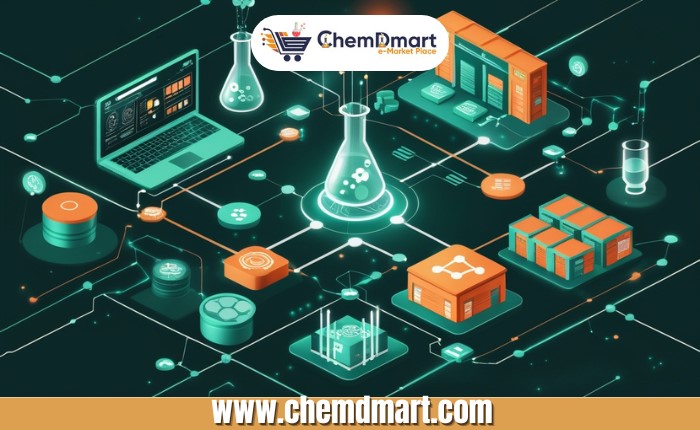
Chemical sourcing used to a simple process, just calling a few suppliers, comparing quotations, and placing the order. But the times have changed, with global chemical procurement, and the loads and loads of data, things have taken a complex turn.
Now buyers deal with 1000s of chemical suppliers, with so many products, and constant price changes. Manual methods are no longer smooth.
This is why digital transformation is no longer optional. It is becoming the backbone of modern chemical sourcing strategies. Technologies like AI, IoT, and blockchain are changing how chemicals are discovered, tracked, verified, and purchased.
This blog explains how these technologies are shaping chemical sourcing today and what that means for buyers and suppliers.
Chemical sourcing has always been messy. With too many suppliers, there is too much data, which makes chemical sourcing way too confusing and tiresome. AI and Machine Learning can easily clean this up. With AI and ML, sourcing can become faster, and more sharper.
With AI’s super-fast analysis. Companies can:
With AI’s fast pattern recognition, decision making becomes way more easy and data-backed rather of just hSit and trial.
Sourcing Task |
How AI Helps? |
|
Supplier discovery |
Identifies qualified suppliers from global data |
|
Price benchmarking |
Compares historical and market pricing |
|
Demand planning |
Predicts future consumption trends |
|
Risk monitoring |
Flags churn, delays, and reliability issues |
With AI, the data that has been scattered, becomes easy to analyse and turns into one usable view. Therefore, the need of going through dozens of spreadsheets, buyers can just ask AI. This turns chemical sourcing more of a proactive task rather than reactive.
The biggest reason for the failure of the chemical supply chains is that it is not traceable. Nobody knows what is happening in real-time, every records are made on historical basis. That’s where IoT comes into play. With the help of trackers, monitors and sensors, you can easily track each part across your supply chain.
IoT does these primary things:
All this, helps in spotting the problems way too early, and the last minute tensions are reduced heavily.
The biggest problem that chemical industry is facing today is counterfeit products, and because of this, trust has becom the hardest part of chemical sourcing. The problems comes with the authenticity of supplier, raw materials and documents. Blockchain can easily fix all these three with ease.
This works by each material batch receiving a unique digital ID, where every step is recorded such as supplier approval, quality testing, packaging, shipping and delivery. These details are visible to each stakeholder, and the data is encrypted and locked. Once written, it cannot be edited.
Undoubtedly, these things are very impressive, and can promise smarter and cleaner supply chains, but the truth is, the progress in these technologies is still very slow. Since chemicals are asset-heavy, innovation cycles are long. Moreover, strict regulations add on to the problems.
On top of that, the industry has been a late adopter of new technology. Even when tools exist, they are slow to turn into daily workflows. Therefore, in the meanwhile online B2B chemical marketplaces such as ChemDmart are making the process easy. ChemDmart focuses on what works right now. It removes friction from chemical sourcing today, not someday.
ChemDmart offers faster chemical sourcing, without complex setup, or massive infrastructure investment. Overall, you get a clear communication and better deals. Sometimes, the best digital transformation is the one you can actually use.