-
-
1
- Notifications
-
New Enquiry Uploaded
1 New Enquiry Uploaded From Huzhou Haipu Chemical Ltd06 Feb 2026, 07:36 AM
- View All Notifications
-
-
Hello,
Menu
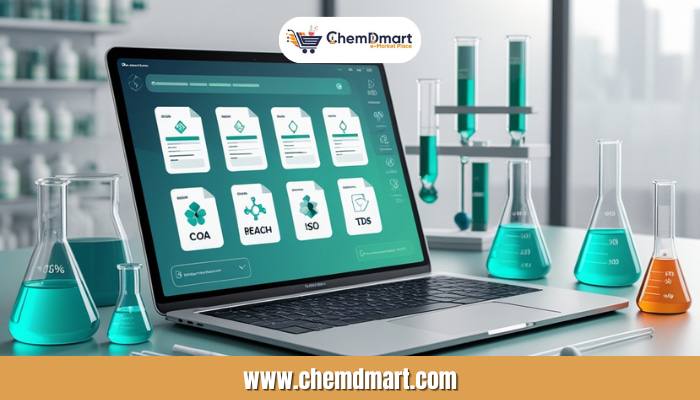
Selling chemicals has quietly moved online. What used to happen over phone calls, emails, and trade shows is now happening inside an online B2B chemical marketplace, often before you even know a buyer exists.
Today, chemical buyers don’t start with an RFQ, but screening. Your company profile is opened. Your product listing is scanned. Your documents are checked. And this all happens in minutes, not weeks. If something feels off, the buyer moves on. No email. No follow-up. Just silence.
This is where many suppliers struggle to sell bulk chemical online. Not because their chemistry is weak. But because their documentation is. Missing files, outdated certificates, or vague compliance claims instantly kill trust. In regulated industries, trust is everything. Once it’s gone, the deal is gone too.
Now, buyers expect certain documents by default. Not “available on request.” Not “will share later.” They expect them upfront, clean, complete, and easy to verify inside the marketplace itself.
This blog breaks down the exact documents buyers expect to see when sourcing chemicals online—and why getting this right is no longer optional if you want to stay visible, credible, and competitive.
Before buyers read your company story or compare prices, they scan one thing first: documents. On any online B2B chemical marketplace such as ChemDmart, missing files mean instant rejection.
If you want to sell bulk chemical online, these documents are no longer “nice to have.” They are table stakes.
Here’s are the important documents buyers expect from chemical sellers online:
Think of this section as the buyer’s mental checklist. If even one key document is missing, the supplier is skipped. Quietly. Quickly. And permanently.
If you want to dominate online B2B chemical marketplaces, this is the document buyers look for first—even before they look at price. The Certificate of Analysis, or CoA, is not paperwork fluff. It is proof. Simple proof.
A CoA is a batch-specific quality report. It confirms what was tested, how it was tested, and whether the batch actually meets the promised specifications.
No assumptions. No marketing language. Just data.
Each CoA is tied to a specific lot or batch, not a general product description. That’s why buyers trust it.
On an online B2B chemical marketplace, buyers cannot physically inspect your material. So the CoA becomes their proxy.
It matters because it:
In pharma, food, and specialty chemicals, a missing or weak CoA is a deal killer. The batch may be rejected. The supplier may be blacklisted. This happens quietly, but it happens fast.
A good CoA is boring, and that’s a compliment. It is clear, structured, and complete.
At minimum, buyers expect:
When you’re trying to sell bulk chemical online, this document does the heavy lifting for trust. A clean CoA says, “We know our process. We stand by this batch.”
Buyers notice that. And they move faster because of it.
If the CoA proves what your chemical is, the SDS explains how dangerous it can be, and how to deal with it safely. When you sell bulk chemical online, this document is non-negotiable. No SDS, no movement. Simple.
An SDS is a standardized safety document. It tells buyers, logistics teams, and regulators:
It follows a fixed format (16 sections). Everyone knows where to look. Everyone expects it to be complete.
You might be wondering why it’s critical in online chemical sourcing? So, on an online B2B chemical marketplace buyers don’t wait for back-and-forth emails.
They use the SDS to:
The SDS is also required for:
If it’s missing, outdated, or unclear, the sourcing process stalls. Or worse, the buyer moves on.
This is where many sellers quietly lose deals. The most common problems:
When buyers are trying to sell bulk chemical online—or buy it—they expect documents upfront. No friction. No chasing.
A clean, updated SDS uploaded directly on the platform signals one thing: This supplier understands modern compliance and digital trade.
And on today’s online B2B chemical marketplace, that signal matters more than you think.
These documents don’t talk about quality or safety. They decide where your chemical is even allowed to exist. If you want to sell bulk chemical online, regulatory certificates are not optional add-ons. They are entry tickets.
Different markets. Different rules. Buyers look for proof that you understand both.
The most common ones are:
On an online B2B chemical marketplace, buyers don’t manually check every supplier.
They filter.
Compliance certificates are used to:
If your documents don’t match the buyer’s market, you’re out. Quietly. Instantly.
Most serious buyers now:
That’s why suppliers who want to sell bulk chemical online need to think beyond pricing.
Compliance visibility is part of the sales strategy now. In short, these certificates don’t just prove compliance. And on a modern online B2B chemical marketplace, access is everything.
Online, nobody can walk into your plant. So buyers do the next best thing, they look at certificates. These documents act like digital trust badges. Quiet. Boring. Very effective.
Most serious buyers scan for these first:
These documents are not always mandatory. But they definitely give you an edge. When buyers see them upfront, decisions get easier. Conversations get shorter. Here’s what these documents include:
When you sell bulk chemical online, these documents answer questions buyers haven’t asked yet. And that makes you look prepared, reliable, and easy to work with.
Selling bulk chemicals online often fails because documentation is slow, scattered, or incomplete. ChemDmart is designed to fix exactly that. It aligns how suppliers sell with how buyers actually evaluate and shortlist vendors on an online B2B chemical marketplace.
Here’s how ChemDmart makes the process easier and faster:
By reducing document friction and improving visibility, ChemDmart helps suppliers build trust faster and close deals more efficiently when they sell bulk chemical online.